
by Jill R. Dorson
Gaming consultant Bill Pascrell III has a story to tell.
“More than a decade ago, I did a panel at ICE on diversity. You don’t ever call a white guy a minority, but I was the only white kid in my kindergarten class – that gives me sensitivity to what minorities go through,” he said.
So, I go up on stage, and sitting at one of the front (audience) tables is Jan Jones from Caesars, and I get up on stage, and I am realizing that the other three people on stage, it hit me like a ton of bricks … four white guys?
Back then, there weren’t that many conferences that did that much with diversity. I get up on stage and Jan looks at me like ‘What the f—- are you doing?’ So I gave a shout out to Jan and said she should be up there.
My, how times have changed.
In the 2020s, a diversity panel at a gaming or sports betting conference is just as likely to have no “white guys” as it is to be populated by women, blacks, Asians, or Hispanics. The same could be said of C-suites for most major operators in the business. Jones, who has been an executive with Caesars Entertainment since 1999, was for 20 years the company’s Executive Vice President for Government Relations and Corporate Responsibility. Under her guidance, Caesars increased its diversity, with 41% of management positions held by women and 57% held by minorities. In 2019, she joined the company’s Board of Directors.
When sports betting became a states’ rights issue following the 2018 Supreme Court decision to overturn the Professional and Amateur Sports Protection Act (PASPA), casino companies like Caesars, MGM, and PENN Entertainment, along with daily fantasy operators like DraftKings and FanDuel, focused initially on gaining access to states in order to offer legal wagering. In 2019 alone, nine states legalized sports betting and by the end of 2022, some form of legal sports betting — whether commercial or tribal, digital or retail — was legal in more than 35 U.S. jurisdictions, including Washington, D.C. and Puerto Rico.
More than five years post-PASPA, lawmakers, regulators, and operators have gained enough to experience to move past the main goal of launching platforms or opening brick-and-mortar sportsbooks to the finer details, whether that be learning the value of having in-house technology, prioritizing responsible gaming, or focusing on diversity, equity, and inclusion (DEI). According to an April 2023 American Gaming Association study, gaming is more diverse than the hospitality in general, and diversity has grown by 20% over the last 10 years among operators, including the ones noted above. The study revealed that 61% of gaming industry employees are minorities vs. 42% of the total U.S. workforce, while 60% of operator employees are minorities. The number of black workers in the industry has grown from 12% to 19% since 2011.
When it comes to who places wagers, consumers are overwhelmingly white and male. According to a recent study by customer-experience company Disqo, 87% of sports betting search, app, and website visits were made by men, predominantly Gen Xers and Millennials. The study points to baby boomers and women as untapped markets.
As the industry works to diversify itself and its offerings, that effort has to come from the top, according to Nakisha Skinner, a commissioner on the Massachusetts Gaming Commission.
“I think the best avenue, quite frankly, as I think about this, is through those who are in power,” she said. “Those executives, those on the boards, or directors, they have to reach out and develop programs. The operators themselves have to avail themselves of ways to engage the community on this topic. It’s important for the operators to develop diverse perspectives.”
The idea that the current consumer base is not diverse shouldn’t matter.
“If the expectation was that only those who predominantly make up any one industry or consumer base, that that audience should be the only reflective voice, there would be no diversity,” Skinner said. “To your point about the audience not being diverse, those diverse perspectives will still benefit the community and allow marginalized people to be heard.”
Said Martin Lycka, the SVP for American Regulatory Affairs and Responsible Gaming at Entain:
Even brushing tax rebates aside, it’s a natural thing to do. It has to be done in a positive way, so companies are not running the risk of positive discrimination, and I don’t want to change this into a political discussion, but it’s about the principle of having diversity and how reflecting U.S. demographics (in our industry) is better across the board.
UK-based Entain is a 50% owner of the wagering platform BetMGM and a leader in responsible gaming.
Pascrell would argue that DEI in wagering goes beyond the moral responsibility that Skinner points to. It’s just good business. He says that it is the “commercially responsible” thing to do, if companies want to remain relevant and competitive.
“If you look at the major operators, none of them are catering to women,” Pascrell said. “You go to a football game, and there are thousands and thousands of women, but no one there is catering to them. The are over 60 million Latinos (in the U.S.) and they love soccer, and there is nothing (in wagering) that caters to them, to provide comfort, to bring people in. But I think it starts at the top where there are all white men catering to other white men.”
Multiple states mandate DEI in gaming, wagering
Operators are not striving to diversify their workforces in a vacuum. As many businesses across the U.S. aim for better racial, ethnic, and gender balance in their offices, gaming regulators in some states are pushing the process forward by requiring not only that operators employ a certain number of minorities, but by setting up programs to help minorities enter the industry or have a chance at success – whether that be through tax incentives, educational programs, or by putting guidelines around having operators to partner with minority- and women-owned businesses.
Maryland, which legalized wagering in November 2020, was the first state to offer incentives to minority- and women-owned businesses. Along with Massachusetts, which legalized in August 2022, lawmakers and regulators in the two states have pioneered opportunities and methods to diversify gaming.
In Maryland, lawmakers were clear in their intent to have a diverse industry. Section §9–1E–02 of the law reads, “It is the intent of the General Assembly that this subtitle is to be implemented in a manner that, to the extent permitted by State and federal law, maximizes the ability of minorities, women, and minority and women–owned businesses to participate in the sports wagering industry, including through the ownership of entities licensed to conduct sports wagering under this subtitle.”
The regulator, the Sports Wagering Application Review Committee, went on to lay out diversity plans, including requiring each applicant for a license to have at least 5% direct or indirect ownership by individuals with a personal net worth of no more than about $1.85 million or less and that applicants present diversity plans.
In Massachusetts, lawmakers included in their law a DEI study to determine whether or not restaurants or other businesses should get wagering kiosks must also include
recommendations to ensure diversity, equity and inclusion are included in this method of sports wagering. As part of the study, the commission shall consult retailers, convenience stores, restaurants, women and minority owned businesses and small business owners.
Business owners are required to submit diversity plans that include both the operator and the vendors that it will use.
The MGC, which holds diversity as a core tenet, has since expanded on what the legislation requires, and Skinner said that while the law “speaks specifically to racial, ethnic, and gender diversity, we have our own internal goals that also pull in veterans. And there may be a new category on the vendor side that encompasses LBGTQ+ and disability that might be worthwhile for the MGC to explore.” The MGC also has its own DEI program manager and diversity manager.
Massachusetts has an open meeting law, which means that every gathering of the commission must be available for public consumption. This also means that the public has the unique opportunity to see how the MGC makes decisions about and handles DEI issues. As examples, during application reviews, the commission pressed potential licensees on how they will diversify and on what kind of timeline. The new law allows for up to five retail sportsbooks, one each at the state’s three commercial casinos, and one each at two racetracks, in addition to up 15 digital platforms.
During that process, Raynham Park, the first of two racetracks that has applied for a license, is an example of the challenges facing a smaller, traditionally male-dominated section of the industry. Massachusetts is one of a handful of states in which dog or horse tracks will have a hand in sports betting, and like many smaller companies in the gaming space, their size and experience present different challenges on the diversity front than those faced by large, experienced casino companies.
We are expecting to hold operators accountable to meet or exceed their goals,” Skinner said. “How they do that will vary widely and how fast will vary. You have some operators that are a little more experienced than others, but at the end of the day, what I would look for is commitment. We can’t really put a timeframe on how fast that will happen.
Others agree, the path to diversity is not a super highway. It likely will, instead, be a measured build.
“I think it’s axiomatic that it will be a stepped process,” Pascrell said.
Oftentimes to make a change, there has to be some protest, there has to be some pushing and protesting, like civil rights, women’s right to vote, the suffragettes. The problem in society, and not to get political, but let’s go back to Hilary Clinton, one of the most accomplished people of our time. If I had $1 for every person who said, ‘I’m a Democrat, but she’s a bitch.’ …
When a woman is as capable, fiery, and competent as Hilary, and that’s what people say, it is very disturbing to say the least. They would never say that about a man. I think it’s one of the reasons we are where we are at, is that we’ve never had a woman president. One would handle things in a different way.
Operators’ DEI programs
Operators in the U.S. began truly embracing the idea of formalizing their diversity plans in the wake of George Floyd’s brutal death and the birth of the Black Lives Matter movement in 2020. Since then, as lawmakers and regulators have strengthened language around minority inclusion, operators have been incorporating DEI into their corporate plans. Nearly every major operator has a DEI lead or committee, and some are very proactively getting out into the communities they want to serve.
At PENN Entertainment, which owns retail casinos and offers digital sports betting in states across the U.S. and Canada, Justin Carter, chair of the company’s Diversity Committee, said the company had traditionally supported diversity in many ways, including through PRIDE Month celebrations and ongoing support for black- and minority-owned businesses. But then CEO Jay Snowden told him “we need to commit what we do to paper,” and the Diversity Committee was born.
Since then, PENN executives have developed five tenets around DEI: scholarship, recruitment, leadership development, procurement, and community engagement. As examples of how PENN puts these concepts into action, it created the PENN Diversity Scholarship Fund, which is a $1 million annual commitment to help the children of employees pay for college. To date, Carter said, 58% of the recipients have been first-generation college students. Beyond that, PENN partners with Historically Black Colleges and Universities (HBCUs) around the country through a STEM scholarship and associated internship program, has created an in-house “Emerging Leaders Program” to encourage frontline workers to explore management, partners with minority-owned suppliers and vendors, and is active on HBCU campuses.
When PENN partners with minority-owned suppliers and vendors — whether those are payment-processing companies or food-and beverage-entities — the company doesn’t just sign them to a contract and end the effort there. Rather, PENN offers training and assistance to help those companies grow, from marketing to operations, and be in position to compete for larger contracts nationwide.
“It’s not a one-size-fits-all,” Carter said. “We have to meet people where they are.”
FanDuel, the biggest sports betting operator by market share in the U.S., is also setting precedent when it comes to DEI. The company, which offers digital wagering, iGaming, and daily fantasy sports leagues, champions its diversity with a variety of programs, including its Women’s Leadership Development Program (WLDP), which is focused on developing and enhancing leadership skillsets to “accelerate women into future leaders” at the company, according to a spokesman. There are two arms to the program – one directed at senior-level women employees and another focused on emerging women leaders.
The genesis of DEI as a strategic priority, according to Keita Young, Senior Director for Diversity, Equity, and Inclusion, came from CEO Amy Howe and the executive leadership team, and FanDuel has 100% supported Young in her new position.
“I think the one thing I just want to stress is I think the leadership support for DEI efforts has been star class, and that’s probably why in my 10 months here we’ve been able to make great strides,” she said. “Before I came here, a lot of people said that other companies were hiring DEI heads, but they are figureheads. At FanDuel, this is a place where leadership is leaning in … I come in every day feeling like I have wings on my back and can do anything.”
Young’s initial goal was to consolidate and provide framework around the grass-roots efforts already going on at FanDuel. The company also continues to grow its employee resource groups and highlights women and minorities that have “broken through barriers of entry” and excelled in the sporting industry through an internal web series entitled “Breaking Barriers.”
Young has been able to formally establish four employee resource groups – Women, Speak (Asian American-Pacific Islanders), Bold (Black Organizational Leadership Development), and Outfield (LGBTQI+) – with three additional groups in process.
And if the results of the recent women’s leadership programs are any indication, bringing the company’s women and minorities together will pay unexpected dividends.
“I think what we got out of it was a lot more than we thought we would get out out of it,” Young said. “The women bonded in a way that we didn’t expect,” including meeting on their own outside of the program, which also drew in some of the men executive-level men at the company.
One key component of the emerging segment of the WLDP was the individualized pairing of the participants with a mentor. Based on the self-identified needs of each participant, a mentor that could best address those needs was assigned, whether it was a man or a woman. Recognizing the importance of allyship, it was important to include everyone in the program, Young said.
FanDuel’s DEI efforts go beyond focusing internally. Among the company’s external efforts, FanDuel has partnered with the United Negro College Fund to provide emergency aid funds to those in need. As part of this partnership, FanDuel also provides summer internship opportunities for UNCF-HBCU scholars to experience career opportunities at FanDuel and in the industry.
DEI on the field
While lawmakers, regulators, and operators are changing how they view and manage diversity within their realms, the product on the field is evolving, as well. Black men have long been a critical part of the sports landscape — according to Interbasket, 81% of NBA players during the 2019-20 season were black. In 2022, about 56% of all NFL players were black, according to Statista.
Major League Baseball considers itself the most diverse of all professional leagues. According to the league, about 40% of all players came from diverse backgrounds in 2022. Overall, about 30% of all MLB players have Latino or Hispanic, and about 6% are black. The NHL is the least diverse of the four major professional leagues. Nearly 84% of all players are white, while Asians, blacks, and Hispanics/Latinos each make up about 4% of the league’s population, according to the first diversity study the league released in 2022.
The diversity on the field isn’t often replicated in front offices or at management levels, though professional leagues as a whole have made a push in recent years to extend interviews to wider swath of potential candidates.
But also interesting is the increase not just in women’s sports, but the increase in betting interest now that professional and college women’s basketball are more easily accessible through streaming and traditional television, and the U.S. women’s recent dominance on the world soccer stage.
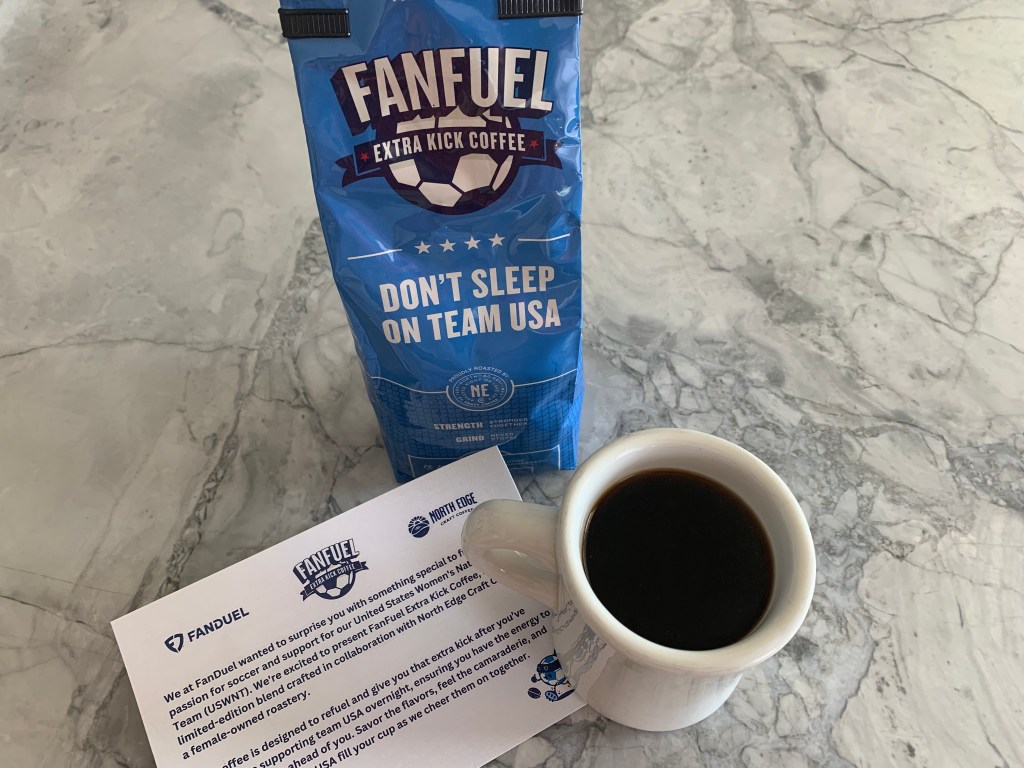
FanDuel recently embraced the Women’s World Cup by crafting “FanFuel” coffee “to fuel your passion for soccer and support for our United States Women’s National Team.” The “extra kick” coffee comes in a light blue bag with the slogan “Don’t sleep on team USA,” as many of the team’s games are overnight because the event is in Australia and New Zealand this year. In addition to providing free coffee from trucks for fans 21 and over in Boston, Columbus, Kansas City, and New York the day after U.S. games, bags of coffee were available for customers to purchase from North Edge Coffee Company, the woman-owned roaster FanDuel partnered with for the promotion.
Every major and most minor digital sports betting platforms are offering an array of wagering opportunities for the Women’s World Cup, in which the U.S., perennially a favorite at the tournament, was eliminated by Sweden in the Round of 16 on Aug. 6. Those offerings are in addition to wagering markets for the WNBA, women’s college basketball, tennis, and myriad other women’s sports. While the amount wagered on women’s sports is dwarfed by that bet on men’s sports, the sector is growing, creating a more diverse landscape for bettors.
“In women’s basketball, fans of the college game are diverse and can vary depending on the geographic location,” Cheryl Coward, a freelance journalist in the gaming space told iGB North America. “Some schools, such as Baylor, have a die-hard fanbase of senior citizens, while in other parts of the country the fans may come from a cross-section of demographics.”
DigitalRG.com is a UK-based certification company that helps entities working with lotteries.
According to that same story, diversity among those betting on women’s sports isn’t just about gender or race or ethnic background. It’s about socio-economics, education, and how tech savvy consumers are. Experts say that women’s sports bettors are almost equally split between men and women, but to continue to elevate women’s sports will is key to reaching parity with men’s sports.
“To better cater to women’s sports, the industry needs to provide more exposure and equal opportunities for female athletes,” Sustainability Director at DigitalRG.com Laura Da Silva told iGB. “This includes ensuring equal pay, providing more media coverage and developing marketing campaigns that promote gender equality.”
What’s next?
As operators, regulators, and lawmakers continue to prioritize DEI across gaming, they are reaping unexpected rewards, as Young suggested, in the workplace and the gaming space overall.
More than 10 years after Pascrell was outraged at the lack of women on a diversity panel, at the annual Gaming Global Expo in Las Vegas this year, there are already four panels with titles like ”Bet on Women: Increasing Opportunities for Inclusive Betting in Sports” to “Leveraging DEI to Drive Margins.” The only one of the four that has a moderator listed will be led by a …. woman.
“When you talk about equity,” FanDuel’s Young said, “It’s not about everybody starting on the same page, it’s about everybody getting to the same page.
“The end game is when there is not the need for DEI officers, but I think there is a long runway that I am on, and I am on the beginning of it, where people who are different or perceive themselves as different have that opportunity.”
Jill R. Dorson is the managing editor at Sports Handle, a national sports betting website.
 Isonomia Quarterly